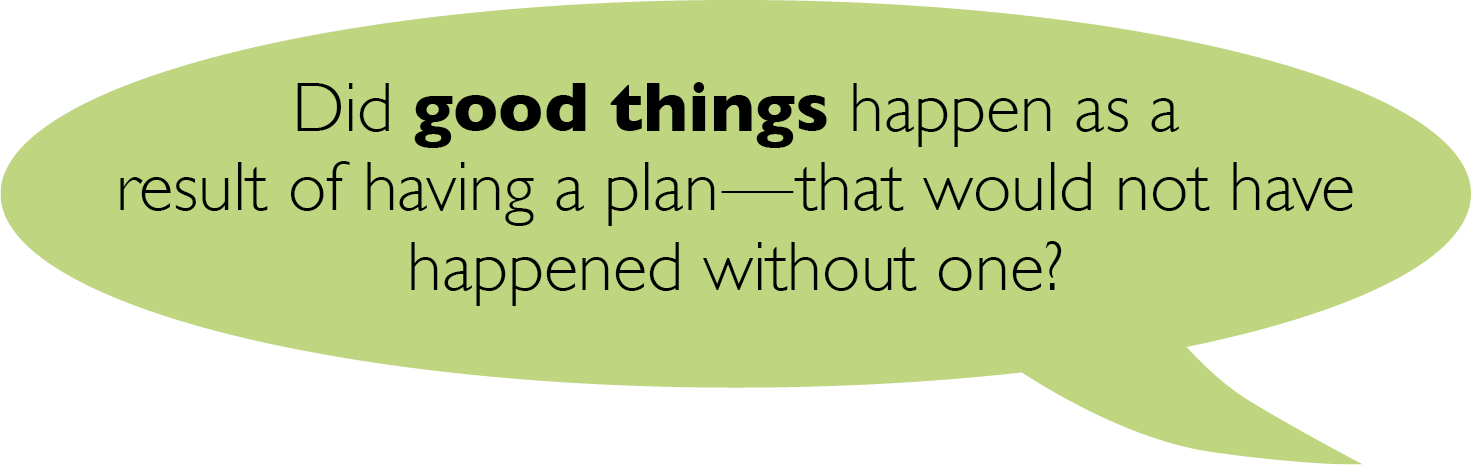
There are several ways to learn whether a person-centered plan is a good plan. First, the person values the plan and believes it will lead to good things happening in their life. Second, assess whether good things happened as a result of having a plan that would not have happened without one.
Even though you won’t be able to fully judge the plan by these criteria until at least a couple of months from the plan’s initation, you can get some clues if you have a good relationship with the person for whom it is being developed. When you think about the person and look at the plan, what is your confidence level that:
Something (good) will be different for the person a year (or less) from now if the plan is well-implemented?
If something magical happened and the person’s short term goals were all completed by tomorrow, the person would say that something good had happened for them. What difference would they see? What might they hear? How would they feel?
The person would be motivated to continue planning?
The person’s post-plan experience would add to their ability to: enjoy today, look forward to tomorrow, take advantage of opportunities, and do something different based on what they’ve learned. In what ways would it enhance their experience?


Qualitative
If it’s a good plan, you’ll be able to see that it involves things that are important to the person and actually make a difference in their lives. There will be a difference that they care about, are able to feel and helps them live their best lives.

Quantitative
At least one observable thing will have changed for the better in the person’s life. A goal achieved, a relationship started or deepened, or a feeling of gratitude for life’s gifts expressed.
The better you know the person, the better the information you’ll have available to you and the more confidence you’ll have in facilitating the planning process with them.